Payday is rarely the same day
A workshop in Su-ngai Padi may pay on a different morning from a provision counter, a clinic, or a district office. New households often discover this when the rice runs out on the partner’s payday eve. The Foundation Plan writes both dates at the top of the month. The person who is paid first is not the treasurer by default. They are simply earlier.
We do not ask couples to pour both wages into one account on principle. Some do, and it suits them. Some keep two savings books and a shared tin for food and fuel. The plan needs to know which choice you made, and who can see the book. A hidden book is a future argument. Say so in the room if one of you wants a small private sum. We would rather write a private sum than discover it later as a shock.
Irregular months
Rubber, fishing, and market stalls do not behave like a salary. If your household has one steady wage and one that swells and shrinks, we write the steady wage as the spine of rent and rice. The irregular wage thickens the reserve or meets a family sum. Using the best month as the rent plan is how people end up borrowing in the quiet month.
A civil-service or hospital wage has its own rhythm, including deductions that never appear as cash in the hand. Bring the slip if you have one. We look at what arrived, not at the proud number at the top.
The kitchen test
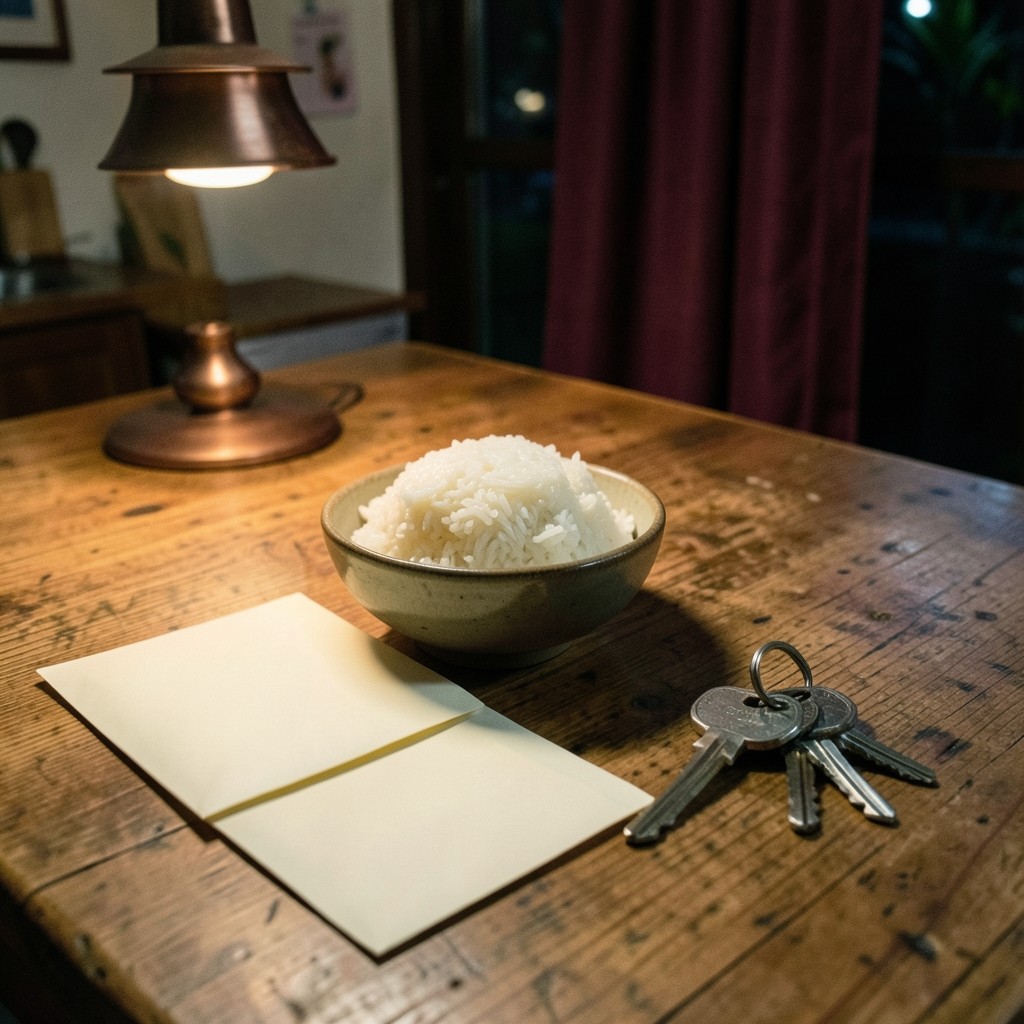
Before the second meeting we sometimes ask a plain question. Who buys the rice, and from which money. Households who cannot answer usually have not chosen a shared food amount. Choose one. It can be modest. It can live in an envelope on a nail. It should not depend on a mood after a long shift.
These notes come from evenings in the practice room. They are observations, not a figure for your own rent. If you want the two wages set beside your own dates, ask for an opening appointment and bring the days you are paid.
Request an opening appointment if you want these questions asked of your own month.